When is the NFL Draft 2026? Where to watch & rules, and more


The NFL Draft 2026 promises to be as exciting as these events get, with a lot of drama in the run-up to Day 1, and prospects showcasing their skills and potential to NFL teams. This year will be the 91st edition of the event, and it will be once again hosted in Pittsburgh, Pennsylvania, for the very first time since 1948.
What time is the NFL Draft 2026?
- Time: 12 pm ET
- Date: April, 23-25
- Location: Acrisure Stadium, Pittsburgh, Pennsylvania
- Where to Watch: NFL Network, ESPN
The 2026 NFL Draft events will take place in two locations along the Allegheny River. The Draft Theater and Main Stage will be located on the North Shore, just outside the Acrisure Stadium. This is the main event where the players will be drafted by the teams.
Separately, the league is hosting The NFL Draft Experience - the fan festival which is open to the public - which will be centered across the river at Point State Park in DowntownPittsburgh.
How does the NFL Draft work?
The 2026 NFL Draft will feature 257 picks that will be spread over three days and seven rounds, with not every NFL hopeful making the final cut. Who lands on a league team’s roster will depend on a variety of factors - how well the athletes did playing in front of league scouts, their desired position, and athletic ability.
Injuries can impact a prospect’s draft stock, although teams may still take a chance on top talent. The 257 picks will take place over seven rounds, with the time between first-round selections now reduced to eight minutes for the 2026 NFL Draft.
Timing for rounds 2-7 has not been changed for this year’s NFL Draft. The draft order has also been decided in advance, with the NFL sharing the order for the First Round.
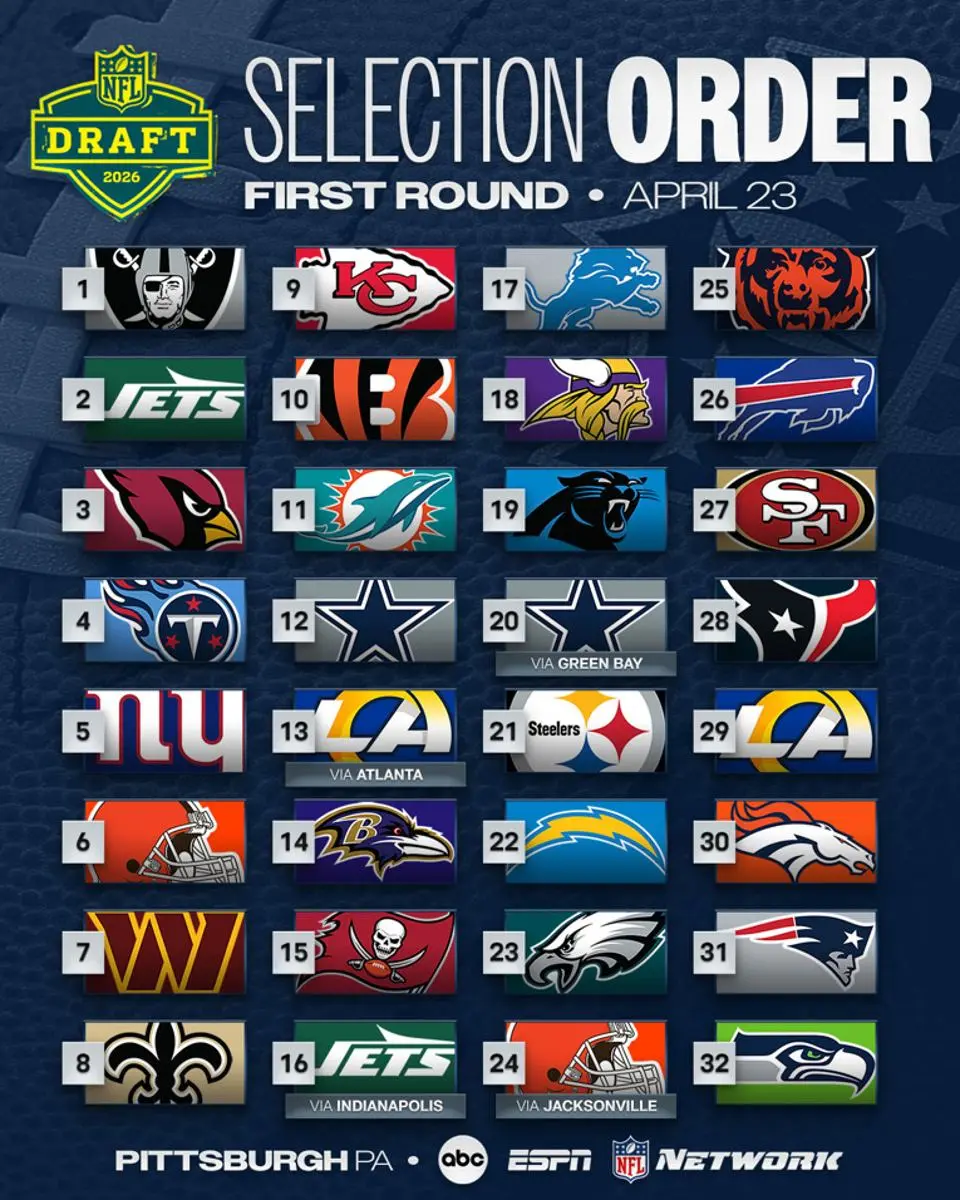
How do the NFL Draft picks work?
With seven rounds in the National Football League Draft, each team is typically allocated one pick per round, allowing them to select a single player each time they are on the clock. In total, this results in 257 selections across the draft, although not all eligible players are chosen. Under standard conditions, each franchise would make seven picks, but in practice, that number often varies.
Draft picks are not fixed assets; they can be freely traded between teams before and during the draft. As a result, franchises frequently move up or down the order, sometimes packaging multiple picks to secure a higher selection or accumulating additional picks to build depth. Alongside trades, the league also awards up to 33 compensatory picks in Rounds 3through 7, further increasing the total number of selections.
Because of this flexibility, teams typically end up making between five and ten picks, depending on their draft strategy and roster needs. The draft order itself is designed to maintain competitive balance, with teams that performed worse in the previous season selecting earlier, while stronger teams pick later.
Combined with strict time limits per selection, this creates a high-pressure environment in which franchises must make fast, strategic decisions to maximize the value of each pick.
But what if players refuse to go with a team?
The NFL Draft has found a way to deal with unwilling players by sending a clear message: fail to own up to your part of the bargain, and your NFL prospects will be diminished significantly.
Basically, a player who refuses to be drafted will not be allowed to sign up with another NFL team. Instead, they would have to sit out the season and re-enter the next draft if they want to. However, this would very much reduce their prospects.
The NFL Draft is created in a way that expects compliance, as prospects who are let in are considered serious enough to wish and pursue a career in the league.
Who is eligible for the NFL Draft 2026?
This year, 257 athletes will be picked, but the NFL Draft has eligibility criteria, which could mean that more than this set number of players are allowed to try and secure a spot in the league. In fact, many talented players can still be overlooked, as luck plays a part in the selection process.
The NFL Draft allows college athletes who are three years out of high school and have competed in college football to participate. There is a road open to international players, too, through the International Player Pathway Program, and some special conditions for drafting players such as college juniors, redshirt sophomores, and early undrafted free agents.
What are the NFL Draft compensatory picks?
The NFL Draft compensatory picks are a unique league dynamic that has been set up to allow franchises to have the opportunity to replace valuable free agents they lost last season.
Compensatory picks give teams additional chances to draft new players, not access to specific free agents. The NFL does not share how it calculates this, i.e., which team gets earlier dibs, but the fact is that analysts have long since guessed the process.
The NFL usually takes player salary, playing time, and postseason honors into deciding which teams get how many compensatory picks. In the NFL Draft 2026, there are 15 teams that claim the customary 33 picks. From the NFL’s website:
"Under the rules for compensatory draft selections, a team losing more or better compensatory free agents (CFAs) than it acquires in the previous year is eligible to receive compensatory draft picks."
Compensatory picks are awarded in Rounds 3–7 to teams that lost more or better free agents than they acquired the previous year, giving them additional chances to draft new players.
Wrapping up: The NFL Draft is worthwhile in 2026
The NFL Draft 2026 promises excitement, high stakes, and emerging talent. From Pittsburgh’s main stage to fan experiences at Point State Park, the event highlights the strategies, prospects, and drama that shape the future of the league.

The history of the NFL logo

Who has the most KOs in UFC history?

World Cup viewers encounter 1.5 gambling or prediction logos once every minute

Can Spain Upset Argentina at the FIFA World Cup Final - Preview and Picks

2026 FIFA World Cup Semifinals preview - France meets Spain, England takes on Argentina

Max Holloway vs Conor McGregor 2: Will Notorious trump the odds to win?

Germany knocked out of World Cup after Paraguay defies 90% odds of defeat

When is the next Power Slap event | Schedule, Date, Where to Watch

Lionel Messi breaks multiple World Cup records as Argentina surges past Algeria

World Cup opening match generates 24.88m viewers in the US

2026 World Cup is expected to be the most wagered-on sports event

EA Sports predicts 2026 FIFA World Cup will go to Spain
Most popular news


Send us a tip
RECOMMENDED TOPICS
gambling industryresponsible gamblinglotterysports bettingappointmentsgambling lawsjackpots